
Site Search
NEWSOM VETOES BENEFICIAL FIRE CAPACITY ACT (AB 1891), MAKING CALIFORNIA LESS FIRE RESILIENT
Tribes and Nongovernmental Organizations will Continue to Fight for Sustainable Funding to Support and Grow the Beneficial fire Workforce; Only Then Will California Be on the Path to Wildfire Resilience
NEWSOM VETOES BENEFICIAL FIRE CAPACITY ACT (AB 1891), MAKING CALIFORNIA LESS FIRE RESILIENT
Tribes and Nongovernmental Organizations will Continue to Fight for Sustainable Funding to Support and Grow the Beneficial fire Workforce; Only Then Will California Be on the Path to Wildfire Resilience
For Immediate Release: September 29, 2026
For more Information:
Colleen Rossier, Director of Government Affairs, Karuk Tribe: 530-925-6251, crossier@karuk.us
Nick Goulette, Co-Executive Director, Watershed Research and Training Center, 530-628-4206, nick@thewatershedcenter.com
SACRAMENTO, Calif. — California legislation that would have addressed the wildfire crisis in a meaningful way through providing ongoing support for the beneficial fire workforce passed through the legislature this summer. It was vetoed by Governor Newsom on September 27, 2026, two days after California Native American Day.
The Beneficial Fire Capacity Act (AB 1891), authored by Assemblymember Damon Connolly, aimed to address the wildfire crisis in California in the only way that it will be truly and fundamentally addressed – by building a sustainable place-based beneficial fire workforce. It passed both houses of the state legislature without a single “no” vote and with bipartisan support.
Much of California’s landscape is fire-dependent. California Native American Tribes such as the Karuk Tribe have been burning for millennia to maintain this landscape, provide for wildlife, and support and protect our communities. Tribes, scientists, and many other environmental and non-profit organizations have been advocating for a return to those Indigenous beneficial burning practices state-wide. However, fire has been suppressed and excluded through fear-based and misguided policies for over a century. This has created significant fuel loading across much of the state, which, combined with the effects of climate change, has set the stage for high-severity catastrophic wildfires to become increasingly common, and increasingly devastating.
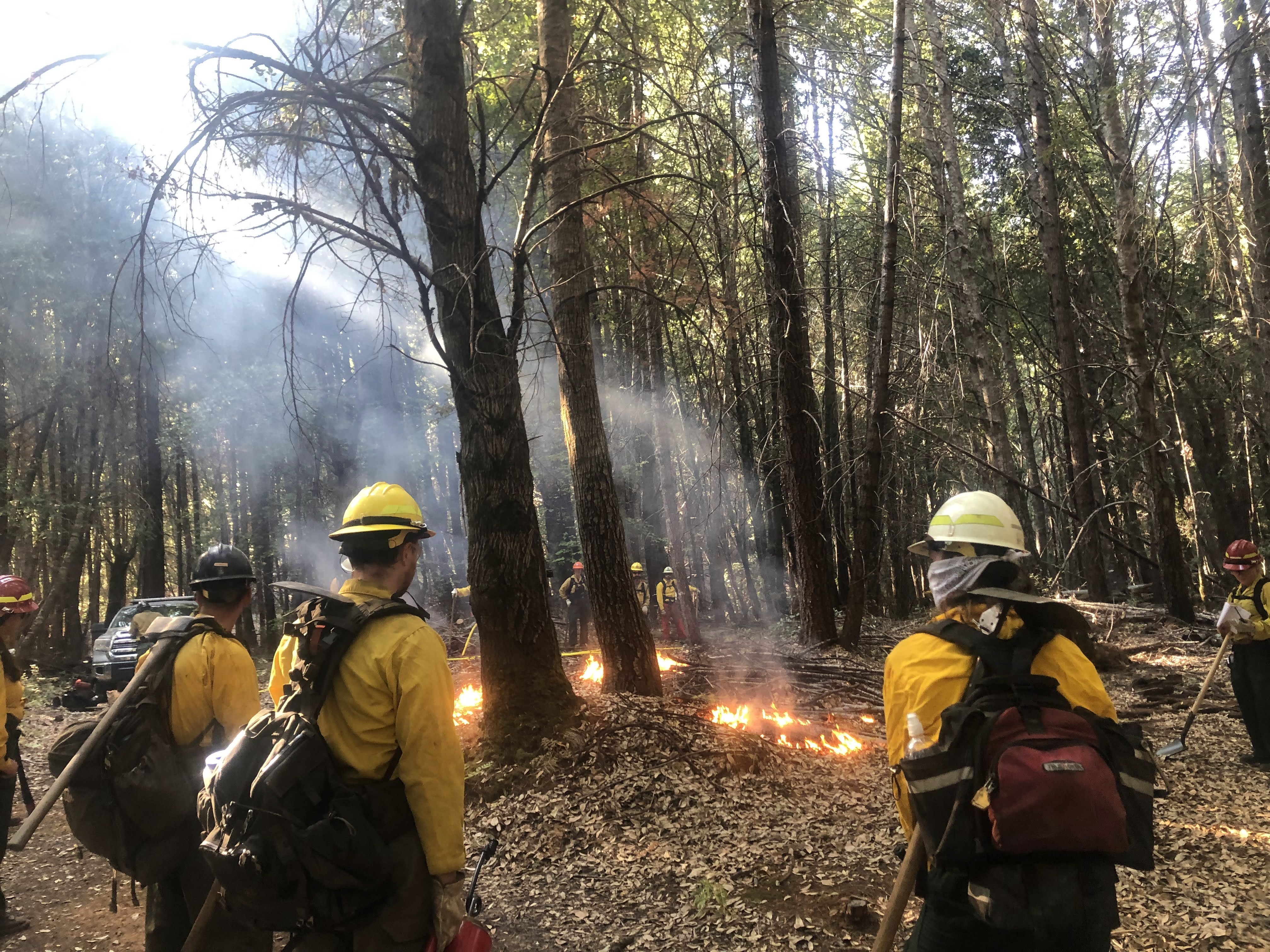
To truly address the wildfire crisis, we need to restore our overstocked, overly dense landscapes, and regularly maintain them. While thinning and logging are a part of the equation, the best, and most effective, scientifically-proven way to do this is with beneficial fire. Treatments are much less effective without it. Additionally, once an area has been treated, it needs to be maintained regularly with fire. This all requires a sustained place-based workforce. However, currently there is no ongoing sustainable funding source for that workforce. Only project-based sources. AB 1891 would have changed that, creating, for the first time, an ongoing source of funding for the beneficial fire workforce.
“The Governor’s decision is a blow to Tribes and a blow to the beneficial fire community. It will make our communities less safe in the face of wildfire,” said Russell “Buster” Attebery, Chairman of the Karuk Tribe. “Karuk People have used fire to manage our lands and keep our communities safe since Time Immemorial. State and federal policies have historically made that burning more difficult because they did not consult and collaborate with Tribes, and our Traditional Ecological Knowledge (TEK) of how to manage these lands. That resulted in poor land management and devastating fires to communities throughout California. Unfortunately, the Governor has decided to continue to add to that by vetoing a landmark bill that would have created sustainable, reliable funding for building and growing our beneficial fire workforce, which would have enabled us to take advantage of the best of what modern science and TEK have to offer to address this critical issue. This decision is a step backward. We will continue to advocate for such a funding source with the incoming Administration because it is just too important. Our communities and our landscapes depend on it.”
In his veto message, Governor Newsom stated, “while I share the author’s goal to increase the pace and scale of prescribed fire projects, this bill limits CAL FIRE’s ability to prioritize limited state resources toward the projects and communities facing the greatest wildfire risk.”
What the Governor misses here is that while project-based funding is important, there is an ongoing need to support the organizations and workforce conducting and leading the beneficial burning as well as providing the training to develop and grow the workforce. There is also a need to conduct maintenance burns once the restoration treatments have been implemented for them to remain effective.
The Governor also notes in his veto message that in California, we are currently treating 200,000 acres with beneficial fire per year. However, before large-scale European settlement, an estimated 4.5 to 6 million acres burned annually across the state, much of this due to Indigenous burning practices. Even California’s 2024 Nature-Based Solutions Climate Targets report set goals of 800,000 acres of beneficial fire application by 2030 and 1.5 million acres by 2045. The current 200,000 acres per year are significantly short of those goals. We will not meet those goals without committing ongoing funding to build and sustain beneficial fire capacity.
AB 1891 would have established a modest funding source for that programmatic capacity building and sustaining. It would have done so by requiring that 10% of the funding allocated to CALFIRE wildfire resilience programming be set-aside to support and grow beneficial fire workforce and capacity at beneficial burning organizations across the state, including Tribes, prescribed burn associations, watershed councils, local fire districts, conservation districts, and other non-governmental organizations, with 25% of that set-aside going to support beneficial fire capacity at Tribes and tribal organizations.
Tribes are the original stewards of the land that many call California, and remain leaders in fire and land management. Given the State’s dark history of genocide and forced assimilation of Native Peoples as well as its fire suppression policies that have only worsened the wildfire crisis, this bill would have been a small, but significant step in the right direction. Instead, his veto was a step backward.
“The State’s own updated California Wildfire and Forest Resilience Task Force Action Plan called for exactly the type of ongoing programmatic support for the beneficial fire workforce that was included in AB 1891,” said Nick Goulette, Co-Executive Director of the Watershed Research and Training Center. “It passed both the Assembly and Senate with bi-partisan supports, and not a single “no” vote. As an issue he had championed throughout his administration, we are deeply disappointed that Governor Newsom was unwilling to make this final commitment to expanding and sustaining beneficial fire as the essential tool it is for protecting CA's ecosystems and communities. We will continue to fight for sustainable, ongoing support for beneficial fire capacity throughout the state, but this is a demoralizing way for this Administration to close.”