
Tribal Employment Rights Ordinance Office (TERO)
Empowers Karuk Tribal membership through jobs, training, and business opportunities.
Mission Statement
The Mission of the Karuk Tribe TERO is to promote and establish self-sufficiency and equality in hiring Karuk Tribal Members and descendants through enforcement of the Karuk Tribe Workforce Protection Act.
The Karuk Tribal Employment Rights Office (TERO) is dedicated to empowering Karuk people by creating equitable employment and contracting opportunities, advancing workforce training and readiness, and fostering self-sufficiency. Through Indian and Karuk preference in employment, certification of Karuk-owned businesses, and partnerships that strengthen economic growth, TERO ensures that Tribal members have the tools, skills, and support needed to thrive.

Services Provided
Workforce Training & Development
TERO allocates a 2% fee on qualifying contracts to fund workforce training and readiness programs. These initiatives help tribal membership and staff gain the skills and support needed to secure or maintain employment and achieve self-sufficiency.
Business Certification & Skills Bank
The department certifies Karuk-owned Indian businesses and maintains a comprehensive skills bank of subcontractors and workers. This resource connects qualified tribal members with contractors working with the Tribe.
Adult Vocational Training Grant (AVT)
The AVT grant provides up to $10,000 in tuition support for enrolled Karuk Tribal Members and Karuk Descendants attending vocational/trade/certificate programs or schools. This award is designed to expand career opportunities through practical, skill-based education. Assistance will be dependent on funding available.
Adult Education Assistance
TERO offers support for adult learners through assistance with GED testing fees, tutoring, textbooks, and other educational costs. Special work-related funding requests may also be considered by the TERO Commission on a case-by-case basis.

Adult Education
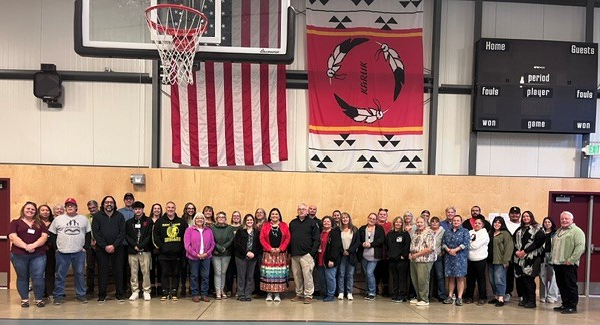
The Karuk Tribe offers programs and funding to support adult education and vocational training, helping members pursue learning opportunities and develop skills for future employment.
Adult Vocational Training Grant (AVT)
Grants to support Karuk Tribal members in pursuing vocational or trade programs, specialized certifications and training.
Adult Education Assistance
Supporting adult education and work-related needs for Karuk Tribal membership through targeted assistance and funding.
Skills Bank Application
Karuk TERO will establish and maintain a Skills Bank to assist employers, contractors, and membership in referring membership to open positions and current projects along with making referrals to membership for opportunities for training and workforce development that may be related to their desired areas of interest. TERO also certifies Karuk-owned Indian businesses and maintains a skills bank of sub-contractors and workers and their skills for referrals to contractors who contract with the Tribe.

TERO Request Form Application
Complete a TERO Request Form to be considered for assistance with employment, training, and contracting opportunities. The TERO program connects qualified Tribal membership with available opportunities while supporting Tribal preference and workforce development.
Events

Resources
The 2015 Tribal Council enacted a tribal law that the TERO Commission worked on for some time. This tribal law protects Karuk Government employees from workplace discrimination. It is the Karuk Tribe Workforce Protection Act. You can view it by clicking on the link below. The TERO Commission meets at least monthly; contact the TERO Director if you would like information about upcoming meetings.
Looking for employment in Siskiyou County? See the Siskiyou County Job List via the Adult Education Pathways website for available positions: https://adulteducationpathways.org/siskiyou-county-job-list/
The Karuk Tribe’s TERO and Workforce Protection Act ensures equal employment opportunities for Tribal members and protects the rights of Native workers. It establishes Tribal authority over employment practices within the Tribe’s jurisdiction and requires fair treatment, training opportunities, and compliance by all contractors and employers.
This plan outlines requirements for contractors engaged in construction projects on Tribal land. It ensures that Tribal hiring preferences, training, and workforce protections are honored. Contractors must meet established hiring goals, partner with the Tribe’s workforce programs, and follow reporting and monitoring procedures.
This plan applies to service providers, vendors, and other non-construction employers working with the Tribe. It ensures fair contracting practices, Tribal hiring preference, and equal opportunity protections. Employers must comply with the Tribe’s workforce policies, reporting standards, and enforcement measures.
TERO Department Staff & TERO Commission
The activities of the TERO Department are governed by a commission of tribal members consisting of two representatives from Tribal Council and representatives from each of our three communities.


Kenneth Brink: Council Representative
TERO Chairman
Debbie Whitman: Yreka District
TERO Vice-Chair
Barry Hockaday Sr: Yreka District
Laura Mayton: Council Representative
Renee Stauffer: Orleans District
Daniel Effman: Happy Camp District
TERO FAQs
Answers to common questions about our program.
TERO applies to all contractors, subcontractors, and employers who do business with the Karuk Tribe or operate within Tribal jurisdiction. This includes both construction and non-construction projects.
Employers must comply with Tribal hiring preferences, workforce protection standards, and reporting requirements. Depending on the contract type, they may also need to establish hiring goals, participate in training partnerships, and coordinate with the Tribe’s TERO office.
TERO ensures that Tribal members and Native workers have better access to quality jobs and training opportunities. By prioritizing local hiring and contracting, it keeps resources circulating within the Tribal community and supports long-term workforce development.
Contact the TERO Department
Have questions? Reach out to us for more information.
TERO Department
(530) 493-1615
tero@karuk.us