
Site Search
2026 Karuk Tribal Youth Forestry Camp
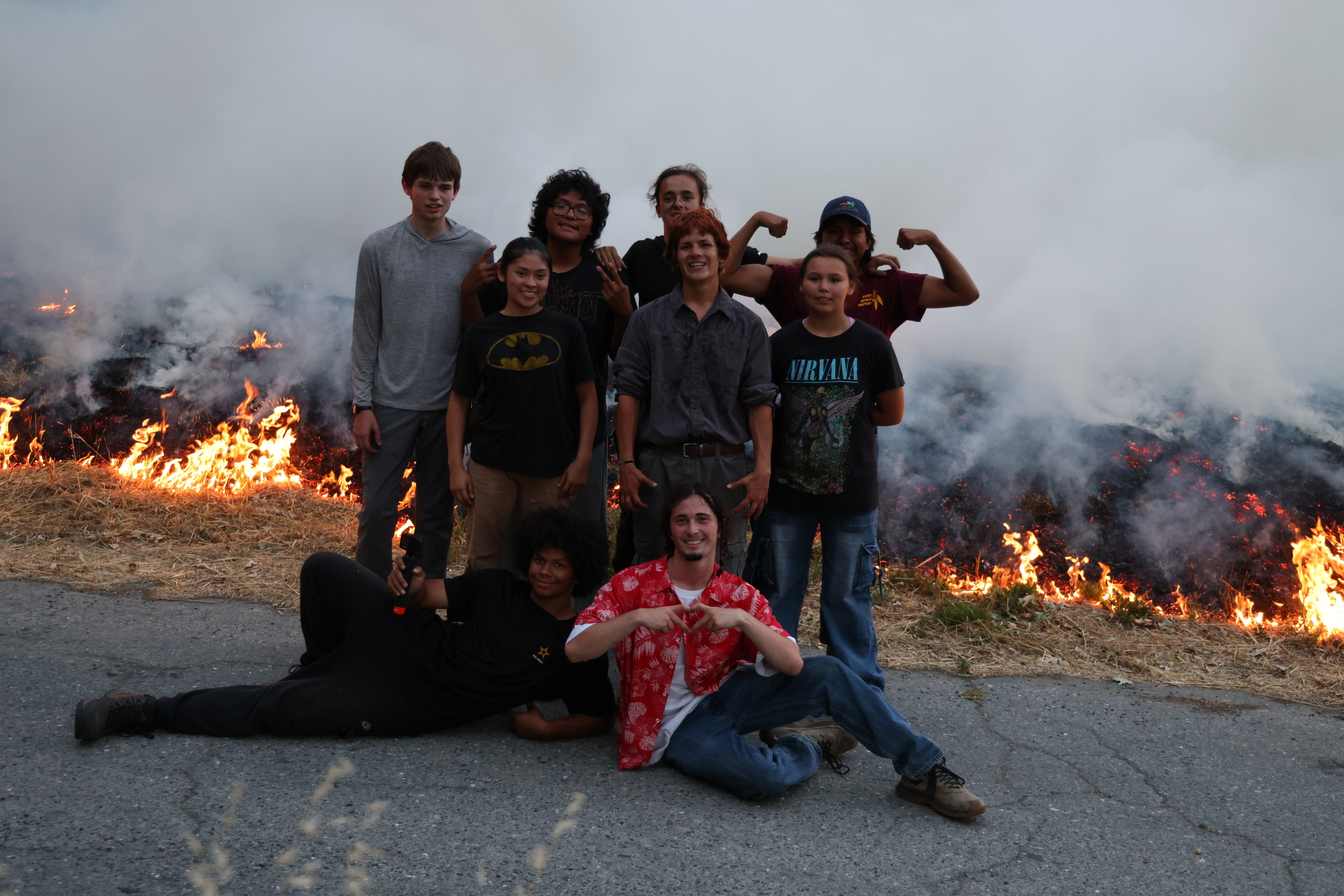
From June 14–20, the Karuk Tribe Department of Natural Resources (KDNR) Pikyav Field Institute welcomed eleven youth from across the West Coast and Arizona to Karuk Ancestral Territory to learn about Karuk land management practices and cultural stewardship.
2026 Karuk Tribal Youth Forestry Camp
From June 14–20, the Karuk Tribe Department of Natural Resources (KDNR) Pikyav Field Institute welcomed eleven youth from across the West Coast and Arizona to Karuk Ancestral Territory to learn about Karuk land management practices and cultural stewardship.
For more information:
Ruby King, Environmental Workforce Development and Internships Division Coordinator, Karuk Tribe, rnking@karuk.us, (530) 627-3446 ext. 3028
Youth started the week with a backpacking trip into Haypress Meadows in the Marble Mountains. After hiking out of Haypress on day four, campers spent time throughout Karuk Ancestral Territory learning from Elders, cultural practitioners, Tribal leaders, subject-matter experts, and KDNR staff.
Throughout the week, youth participated in presentations and hands-on learning covering topics including Karuk Tribal Forestry, Cultural Connections and Local Context, Revitalizing Relationships with Fire, SB 310, Indigenous Fire Stewardship, advocacy and media training, wildlife, fisheries, habitat restoration, GIS, and the importance of Good Fire. They also had opportunities to go birding, explore map meadows, conduct fish dives and seine netting, participate in cultural burning, and experience an Indigenous Fire Stewardship and Agroforestry Tour.
These youth stepped up and challenged themselves in new ways. They listened attentively, asked thoughtful questions, and shared their own perspectives, experiences, and knowledge, creating a learning environment for everyone involved.
“Our Karuk Department of Natural Resources Pikyav Field Institute and our youth are just a few of the many reasons the Karuk Tribe is so strong,” says Russell “Buster” Attebery, Karuk Tribe Chairman. “I am proud to support the many young people who are gaining valuable skills through Tribal Forestry and other hands-on learning opportunities that will help strengthen our communities.”
“We know the youth will continue expanding their knowledge and stepping into roles as our future leaders and cultural land management stewards. We also want to extend a heartfelt thank you to everyone who showed up for our youth to teach, lead, and mentor them,” Ruby King, Environmental Workforce Development and Internships Division Coordinator, Department of Natural Resources, said. “Camp would not have been the same without the strong leadership, intergenerational knowledge sharing, and cross-cultural connections that made this week so meaningful.”
Pikyav would like to recognize and thank the Karuk Tribal Council for their support and the camp’s presenters, mentors, and instructors: Chook-Chook Hillman, Ron Reed, Leaf Hillman, Cody Conrad, Jesse Goodwin Jr., Forrest Davis, Greg Moon, Colleen Rossier, Michael Sanchez, Bill Tripp, Sandra Huerta, Ryan Reed, Leece LaRue, Stormy Staats, Kathy McCovey, Jessica Conrad, Judson Fisher, Cleo Woelfle-Hazard, Sonny Mitchell, Christy Wheatley, Frank Lake and family, as well as the internal planning team, chaperones, the many KDNR staff who contributed throughout the week, our Elders, cultural practitioners, community members, media partners, and Cal-Salmon Catering.
“The Karuk Tribal Youth Forestry Camp reflects a shared vision to provide culturally-responsive workforce development training for Tribal youth who want to learn about career opportunities in natural resource fields,” Aja Conrad, Pikyav Field Institute Program Manager, Department of Natural Resources, said. “Through connecting youth with Tribal elders, field experts, and mentors, we are able to help show the next generation of environmental leaders how the work that we do is directly tied to our inherent and enduring responsibility to help “fix the world” as Karuk peoples. In return, we learn so much from our young participants, from them sharing their own perspectives and expertise.”
Together, these experiences help cultivate the next generation of Indigenous land stewards grounded in Karuk culture and responsibility.
YÔOTVA!